The Yucatán, stop by stop
Pick a site. Then move the date slider to see where the Sun rises over the Yucatán and how high it climbs at noon.
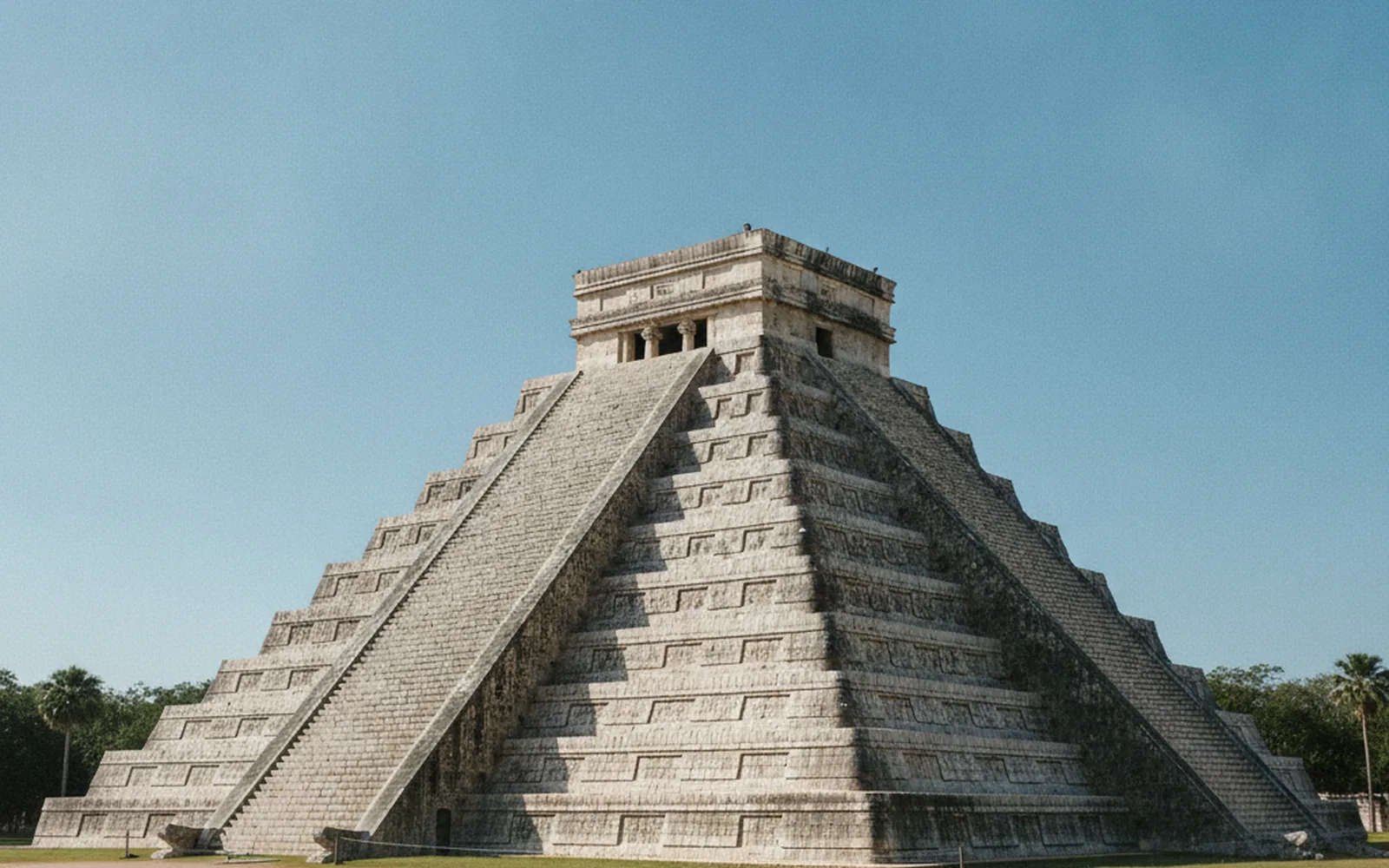
El Castillo
The Temple of Kukulcán is a nine-terraced pyramid with a staircase on each side. Count the steps on all four stairways and add the top platform, and you reach 365, the days of the solar year.
- Around the equinoxes, late-afternoon sun throws triangles of light down the northern balustrade.
- The triangles join the carved serpent heads at the base, so a body of light seems to descend.
- The effect is visible for several days either side of the equinox, not only on one date.
Sun positions are calculated for the site’s latitude without refraction or terrain, so real sunrise over a raised horizon appears a little later and further south. Photos are illustrative.
Read before you go
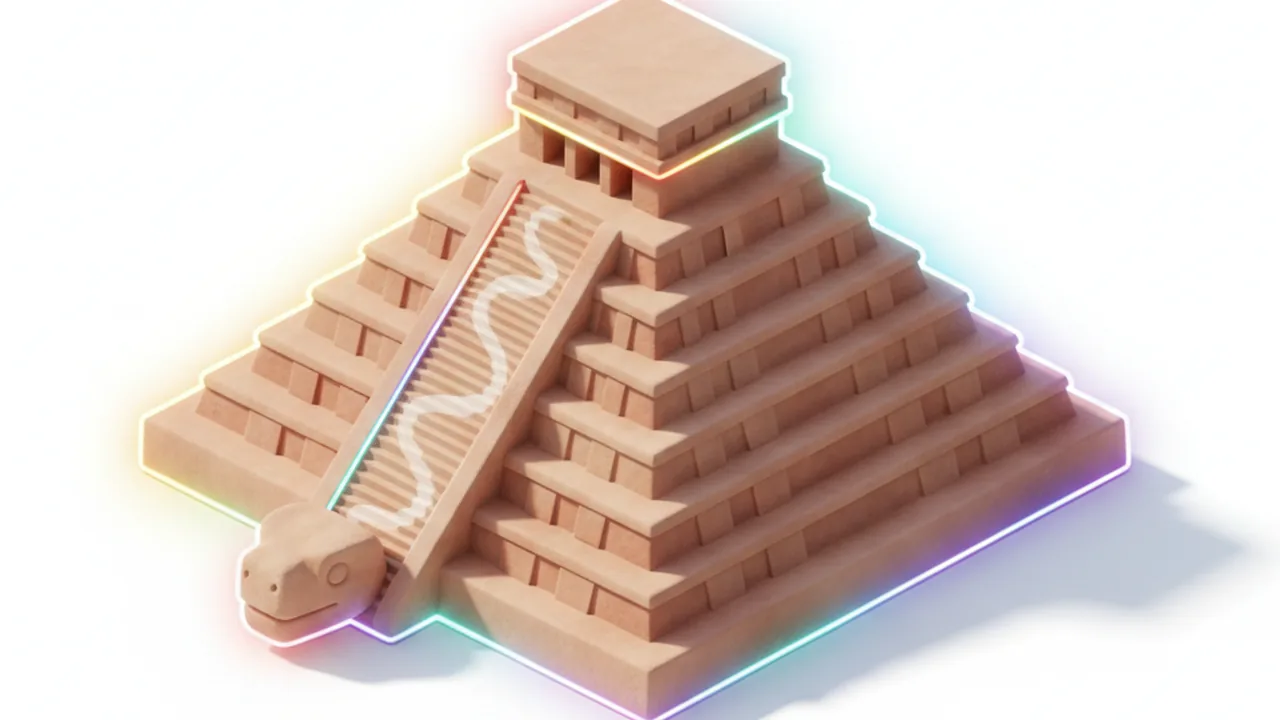
El Castillo's Equinox Serpent: How the Shadow Actually Works
Each spring and autumn, crowds gather at Chichén Itzá to watch light ripple down a stair rail. The effect has a clear geometric cause, and a more open question about intent.
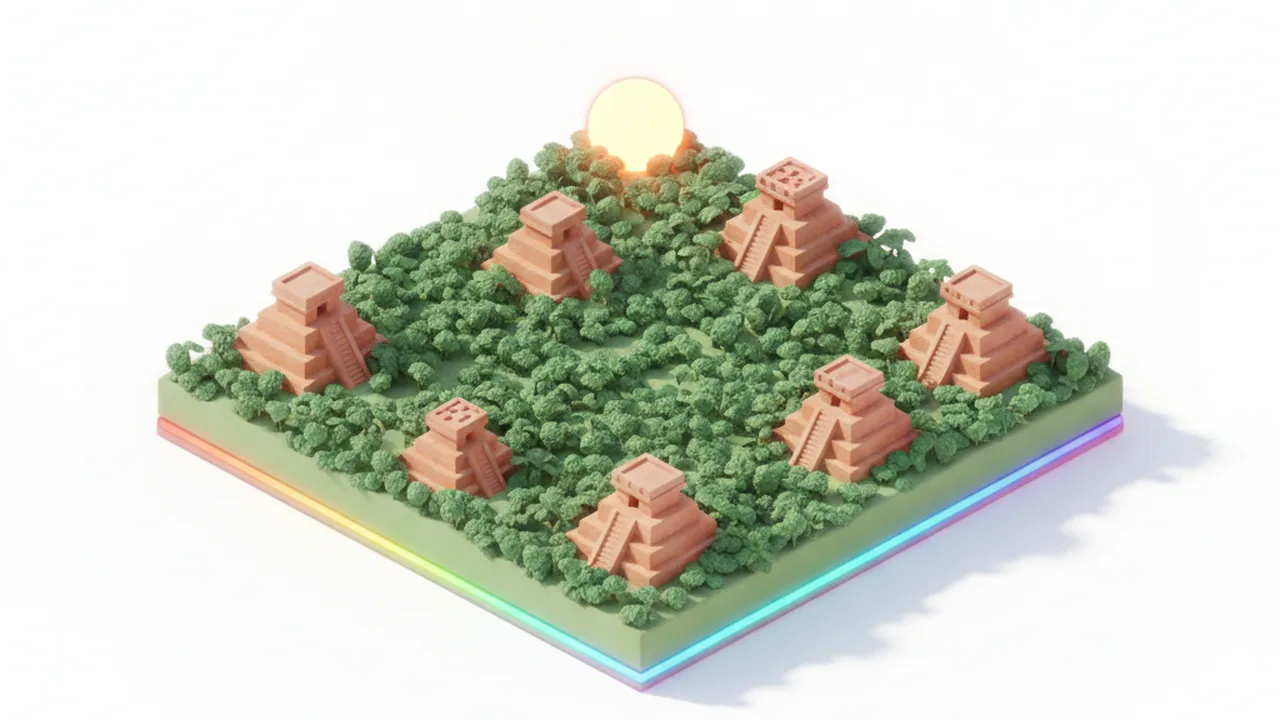
Solar Observatories of the Yucatán: Chichén Itzá, Uxmal and Beyond
On the flat Yucatán plain there were few natural sunrise markers, so the Maya built their own. A site-by-site guide to the peninsula's sky-watching buildings.
Maya Astronomy Explained: Sun, Moon, Venus and the Count of Days
Without lenses or telescopes, Maya astronomers built calendars, Venus tables and eclipse warnings. Their tool was the count of days, kept for centuries.