Solar science: the same Sun, seen with new tools
The Sun that marked planting days is also a magnetic, changing star. Here is what modern observers measure and how it connects to the ancient sky watchers.
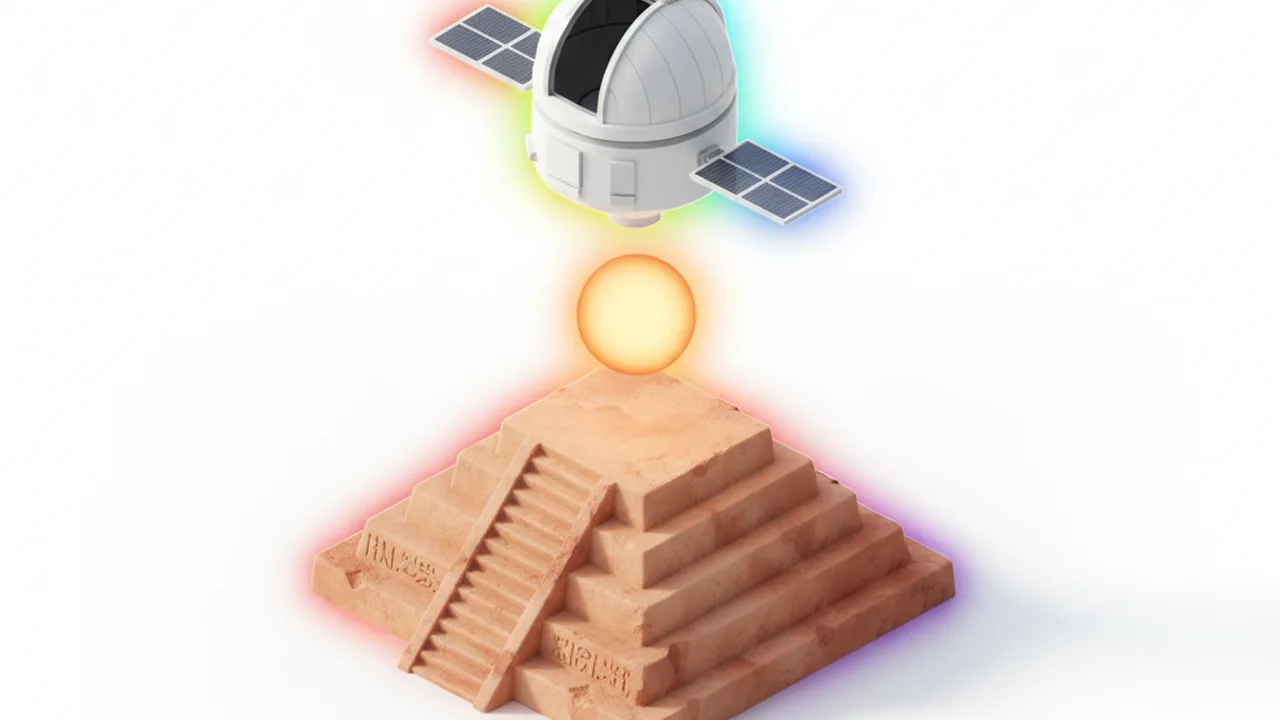
Why seasons happen
Earth’s tilt changes the Sun’s noon height and day length, not the distance to the Sun.
The solar wind
A constant stream of charged particles flows from the Sun and shapes the space around Earth.
Space weather
Strong solar storms can disturb satellites and power grids and paint auroras in the sky.
3 articles on Solar science
Sourced field notes, each with key takeaways, a table and short answers.
NASA and Ancient Astronomy: Old Sky Records, New Solar Science
Spacecraft now watch the Sun every second of the day. Yet the oldest naked-eye records still answer questions that no mission can, and the two traditions meet more often than you might think.
What Ancient Sky Watchers Knew About the Sun, and What We Added
Ancient observers could not explain why the Sun behaves as it does. They could describe its behaviour with great accuracy, and much of that description still holds.

Reading the Sun Without a Telescope: The Naked-Eye Toolkit
Before lenses, the tools for studying the Sun were a fixed place to stand, a straight edge, a shadow and a long memory. Used together, they were remarkably precise.
Frequently asked questions
Why does the Sun rise in a different place through the year?
Earth’s axis is tilted by about 23.44°, so the Sun’s declination changes through the year and its rising point swings north and south along the horizon.
What is the solar wind?
A continuous flow of charged particles from the Sun’s outer atmosphere. Earth’s magnetic field deflects most of it.
Can solar storms affect daily life?
Strong storms can disturb radio, satellite navigation and power grids. Forecasters watch the Sun continuously to give warnings.
See the sky the way they did
Open a viewer, pick a date and watch the sunrise point move along a real horizon. Then download the guides and take them outside.